Water Softener About
A water softener is a filtration system designed to remove high concentrations of calcium and magnesium from water. When water contains high levels of these minerals, it is referred to as "hard water."
Hard water can clog pipes, leave stubborn scale buildup on fixtures, stain sinks, and prevent soap from lathering effectively. A water softener solves these issues through a chemical process called ion exchange.
How a Water Softener Works
Most traditional water softeners operate using a resin tank and a brine tank. The process typically follows these steps:
-
Hard Water Enters the System: Raw, hard water enters the water softener's main tank (resin tank).
-
Ion Exchange: The resin tank is filled with thousands of tiny, negatively charged plastic beads (resin). These beads hold onto positively charged sodium (or potassium) ions. Because calcium and magnesium have a stronger positive charge than sodium, they displace the sodium ions and stick to the resin beads as the water passes through.
-
Soft Water is Delivered: The newly "softened" water, now carrying a harmless amount of sodium instead of calcium and magnesium, flows out of the tank and into the homes plumbing system.
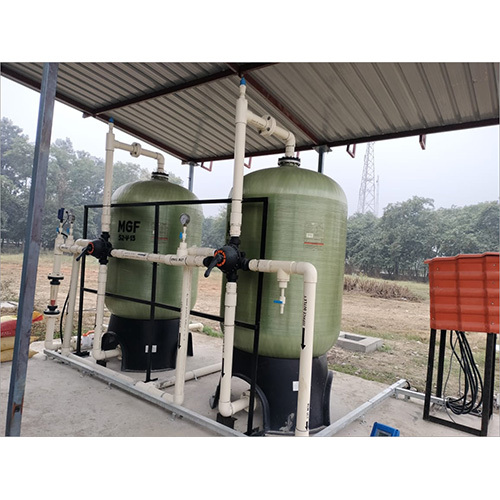
Advanced Ion Exchange TechnologyEmploying a robust ion exchange process, this water softener ensures efficient removal of calcium and magnesium ions, significantly reducing water hardness. Suitable for use with borewell, municipal, or industrial water sources, the system's resin capacity ranges from 30 to 200 liters, allowing customization based on scale and requirements.
Flexible Operation and Easy MaintenanceDesigned for user convenience, this system offers manual and semi-automatic regeneration options-optionally upgradable to automatic control via timer or meter. Installation is straightforward, and with easily accessible multiport valves and included brine tank, ongoing maintenance is simplified for the user.
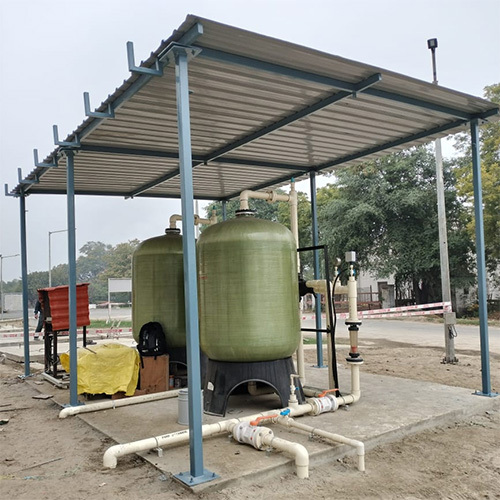
Versatile Applications and Durable DesignBuilt with corrosion-resistant FRP and available in glossy or matte green finish, this water softener is resilient to challenging environments. Its modular nature accommodates a range of applications, from residential complexes to industrial process water, providing reliable and consistent water quality for diverse needs.
FAQ's of Water Softener:
Q: How does the water softener remove hardness from water?
A: The water softener operates using ion exchange resin technology, which replaces calcium and magnesium ions in hard water with sodium ions, effectively lowering water hardness and preventing scaling in plumbing and appliances.
Q: What is the process for regenerating the water softener?
A: Regeneration can be done manually or semi-automatically, depending on the chosen model. The process involves passing a brine solution through the resin bed to flush out accumulated calcium and magnesium ions, restoring the resin's effectiveness. An automatic upgrade with timer or meter is also available for enhanced convenience.
Q: Where can this water softener be installed and used?
A: This system is suitable for a variety of environments, including hotels, hospitals, factories, apartments, and institutions. It is designed for both commercial and residential applications requiring softened water for usage such as boiler feed and process water.
Q: When should the resin bed be regenerated?
A: Regeneration is typically required after treating 120-140 cubic meters of water, although this may vary depending on the inlet water hardness and resin volume. Regular monitoring of water quality and flow rate will help determine the optimal regeneration schedule.
Q: What benefits does this water softener provide?
A: Users benefit from efficient and reliable hardness removal, protection of plumbing systems and appliances from scale buildup, reduced detergent consumption, and improved water quality. Its corrosion-resistant construction and easy maintenance make it a long-lasting, cost-effective solution.
Q: Is any external power supply required for this water softener?
A: No external power is required for manual models, making the system energy-efficient and suitable for areas with unreliable electricity. Optional automatic variants may need a power source for timer or meter functions.

 Send Inquiry


 Send Inquiry


 English
 Spanish
 French
 German
 Italian
 Chinese (Simplified)
 Japanese
 Korean
 Arabic
 Portuguese

